
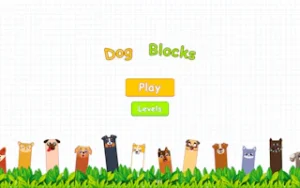




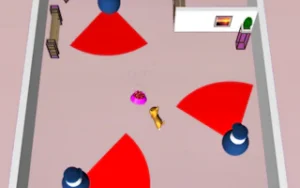
Dog Blocks turns shape placement into a test of spatial reasoning. Instead of stacking pieces carelessly, players must arrange different forms across the available grid while avoiding unwanted gaps. The challenge becomes more demanding as the game progresses, rewarding players who can read the board, plan several moves ahead, and make precise placements.
About Dog Blocks
Genre: Puzzle and spatial strategy game
Objective: Place the available shapes into the grid so the spaces are filled correctly without creating problematic gaps or piling pieces on top of one another.
Gameplay overview: Players receive pieces with different shapes and must decide where each one belongs. Pieces can be dragged onto the board and rotated when necessary, turning every placement into a small spatial puzzle. The game gradually asks for more careful decisions as finding suitable positions becomes less obvious.
Controls
Use your mouse or finger to drag and drop pieces onto the grid. Rotate the shapes as needed before positioning them in the available spaces.
Gameplay Details
The key to Dog Blocks is understanding how individual pieces interact with the empty areas around them. A shape may fit one location perfectly but leave an awkward space that makes later placements difficult. This makes the order of your moves just as important as the accuracy of each placement.
Rotating pieces adds another layer of flexibility. Players can test different orientations before committing to a position, which encourages observation rather than rushed movement. As the challenge increases, efficient use of corners and edges becomes increasingly valuable.
Tips and Strategies for Dog Blocks
- Start with corners: Corner spaces have fewer possible connections, so filling them early can help establish a useful framework.
- Work along the edges: Edge positions are also more restrictive and can make the remaining open area easier to understand.
- Check future gaps: Before placing a large shape, consider what kind of space it will leave for the remaining pieces.
- Rotate before committing: Try different orientations to find the arrangement that uses the grid most efficiently.
- Think beyond one move: A placement that looks correct immediately may create problems later, so plan several steps ahead when the board becomes crowded.
Why Players Enjoy Dog Blocks
Dog Blocks has a clear puzzle loop that makes each placement meaningful. Players will notice that success depends less on speed and more on recognizing patterns, measuring available space, and avoiding decisions that limit future options.
One notable strength is the way the difficulty comes from the board itself. As the available space becomes harder to manage, familiar shapes can require completely different solutions. That gradual increase in decision-making gives the puzzle a natural sense of progression without relying on complicated controls.
Game Information
- Developer: Not specified in the provided source
- Platforms: Not specified in the provided source
- Languages: Not specified in the provided source
- Main mechanics: Drag and drop, shape rotation, and grid placement
Conclusion
Dog Blocks offers a focused spatial puzzle where every shape needs a purpose. Careful placement, rotation, and forward planning become increasingly important as the board demands smarter solutions. Starting with corners and edges provides a practical foundation, while thoughtful positioning helps prevent gaps from ruining an otherwise promising arrangement.
Leave a Reply