
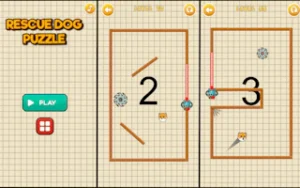










Arcade veterans know that true mastery isn’t just about fast reflexes; it’s about movement economy and ruthless routing. Rescue Dog presents 100 increasingly intricate puzzle rooms that strip away the chaos of real-time action, replacing it with a pure, unyielding test of spatial logic. Escaping the grid requires you to systematically dismantle numbered barricades using nothing but perfectly calculated pathing and absolute patience.
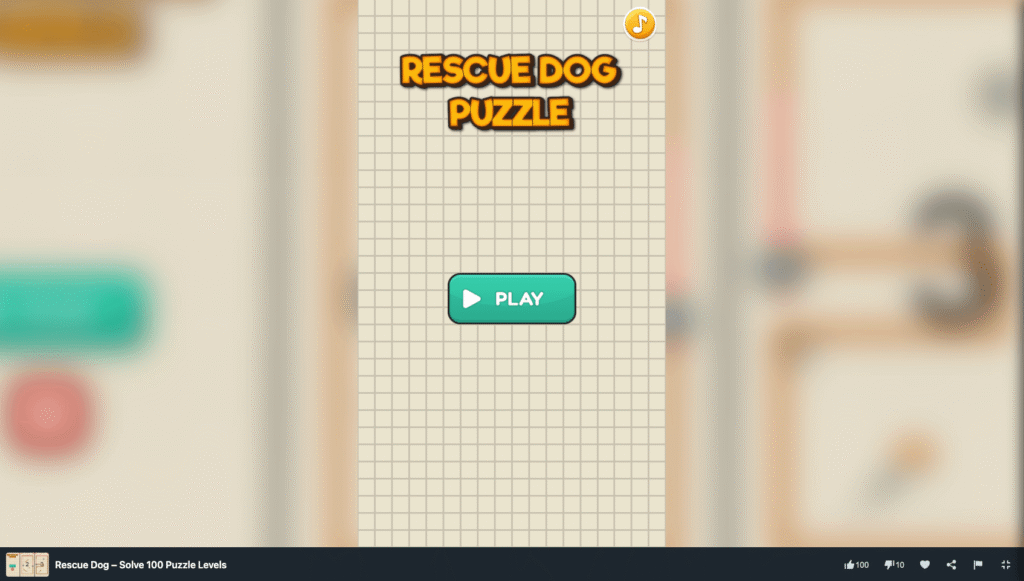
Deconstructing the Numerical Wall Logic
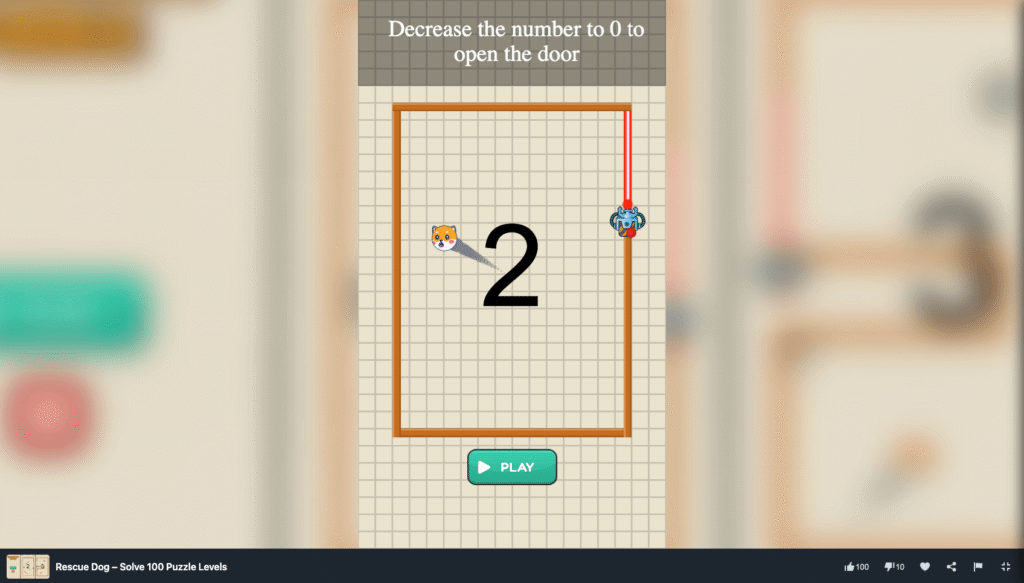
The underlying engine of this 100-level gauntlet operates on a strict numerical degradation system mixed with spatial constraints. You aren’t executing pixel-perfect jumps or timing a dash; you are manipulating grid-based values through physical proximity. Every calculated movement your dog makes toward a numbered wall forcibly subtracts from its integer value. The exit remains completely locked behind an impenetrable barrier until you calculate the exact sequence of movements required to grind the target walls down to absolute zero.
Mechanical execution here relies heavily on movement economy rather than raw APM (Actions Per Minute). Wasted inputs are punished severely as the stages progress into the upper tiers. The physics of the puzzle dictate that you cannot simply pass through a wall until its value is nullified. If you blindly trace a path to the nearest block without calculating the broader board state, you will inevitably trap your character in a dead end, leaving you with insufficient grid space to zero out the remaining obstacles. Every tap and click is a commitment.
Navigating via mouse clicks or touchscreen taps means your input precision must be deliberate and intentional. High-score chasers must develop a comprehensive mental map before ever touching the controls. The true skill gap in this game lies in processing the entire grid simultaneously, transforming a chaotic room of numbered blocks into a streamlined, high-efficiency route. You must learn to read the spatial relationships between the dog, the walls, and the exit, turning a seemingly impossible blockade into a perfectly executed sequence of mechanical inputs.
Advanced Routing and Execution Phases
- Phase One – Grid Analysis (The First 60 Seconds): Do not touch your mouse or screen the exact second a new stage loads. The most fatal mistake impatient arcade runners make in the early levels is reacting instead of meticulously planning. Spend the first minute purely analyzing the numerical distribution of the room. Identify exactly which walls block the critical path to the exit and which are merely decoy obstacles deliberately placed to waste your movement and trap you in corners. Mentally trace your entire route from the spawn tile to the exit door, ensuring your path naturally funnels you against the necessary barriers without requiring highly inefficient backtracking. Patience in the first minute dictates your success in the final seconds.
- Phase Two – Movement Economy and Choke Points: As you push deep into the mid-game stages, the sheer volume and integer values of the numbered walls violently escalate. Your primary survival resource is no longer just the open floor space; it is your positional leverage. You must prioritize grinding down high-value walls that lock down the central grid choke points. Maneuver your dog into positions where a single, tight movement sequence can simultaneously apply pressure to multiple required barriers. If a route requires you to isolate yourself in a far corner just to zero out a minor, irrelevant wall, you have completely miscalculated the optimal path and need to reset the board.
- Phase Three – Subconscious Pathing (The Final Stages): Reaching the final tier of the 100-level gauntlet demands absolute mental synchronization and flawless execution. At this expert level, the intricate board layouts will instantly overwhelm players who attempt to calculate moves one single step at a time. You must start recognizing recurring numerical patterns and complex geometric setups. Train your brain to see the grid in complete movement blocks rather than individual steps. Let your ingrained spatial memory take over, executing complex, multi-wall reduction sequences on pure instinct to secure the most efficient, fluid clear time possible.
Screenshot game play Rescue Dog on MiniWebGames.com
The Rush of the Perfect Route
There is a profound, almost hypnotic satisfaction that hits your nervous system when you finally crack a notoriously complex puzzle room. Staring at an impenetrable fortress of high-numbered walls and slowly, methodically dismantling it through sheer, calculated spatial logic delivers an unmatched dopamine hit. That fleeting moment when the final zero drops, the barrier shatters, and the exit swings open guarantees you will instantly click the next level to conquer the grid all over again.


Leave a Reply