








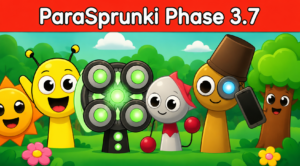
The browser-based music sandbox scene has evolved rapidly, but few projects command attention quite like the latest iteration of the Arthuller series. Hosted on Cocrea.world and engineered through the Gandi IDE, Sprunki Arthuller Treatment Phase 4, a masterfully grim Sprunki evolution, completely shatters the barrier between interactive beat-making and psychological horror. It abandons the playful origins of rhythm gaming, dragging players into a deeply immersive, bass-heavy audio environment that feels both suffocating and undeniably hypnotic.
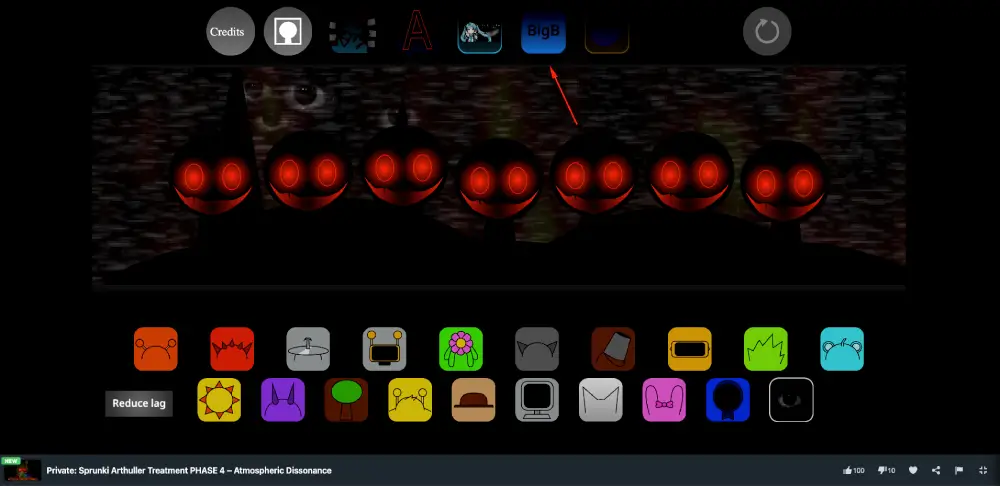
The Core Experience: Engineering the Soundscape
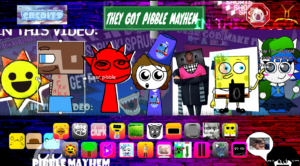
At its mechanical core, the gameplay loop remains faithfully tethered to the intuitive drag-and-drop layering system that veteran players expect. However, executing this within the Gandi IDE framework on Cocrea.world has drastically reduced audio latency, resulting in a perfectly synced, frictionless playback engine. You are handed a roster of visually distinct avatars, each acting as an individual audio stem—ranging from guttural basslines and distorted 808s to haunting, whispered vocal loops.
The true magic happens when you start combining these highly contrasting elements. Unlike standard beat-makers that force harmonious, pop-centric melodies, Phase 4 actively encourages dissonance. The engine handles the EQ balancing remarkably well, ensuring that the heavy low-frequency hums never completely swallow the piercing transients of the percussion tracks. The pacing of your composition is entirely in your hands. You can slowly build a creeping, ambient dread by introducing one vocal track at a time, or instantly flood the soundscape with chaotic, polyrhythmic percussion.
It operates less like a traditional Sprunky title and significantly more like a digital mixing board tailored for experimental, dark ambient producers. The lack of a strict win-state might alienate casual players searching for a high score, but for audiophiles, this open-ended structure is the ultimate playground for raw sound manipulation.
Acoustic Nightmares & Visual Distortion
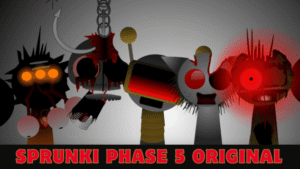
You simply cannot critique this project without acknowledging the suffocatingly brilliant art direction. The aesthetic perfectly mirrors the grim progression of the audio tracks. As you layer more stems onto the main stage, the visual feedback escalates. The character sprites utilize muted palettes and twitchy, erratic idle animations that react dynamically to the beat, creating a visceral, immersive connection between the player’s inputs and the on-screen performance.
But the sound design is where Phase 4 truly flexes its muscles. The spatial audio and panning feel incredibly deliberate, widening the soundstage in a way that browser games rarely achieve. When you introduce a bitcrushed snare or a heavily delayed synth pad, it occupies its own distinct frequency band without muddying the master mix. The minimalist user interface is crucial here. By keeping menus and intrusive HUD elements completely out of the way, the design ensures that your focus remains entirely on the hypnotic audio-visual synergy.
The overall atmosphere straddles a delicate line between a melancholic digital symphony and a full-blown analog horror experience, maintaining a level of player immersion that is frankly astonishing for a lightweight web-based engine.
What We Love About Phase 4
- Flawless Audio Mixing: The underlying engine dynamically balances EQ and frequencies, ensuring that even the most chaotic, layered tracks never devolve into unlistenable noise.
- Immersive Visual Feedback: The macabre art direction and beat-responsive character animations create a deeply unsettling atmosphere that perfectly complements the dark soundtrack.
- Low-Latency Architecture: Utilizing the Gandi IDE provides an incredibly responsive, frictionless drag-and-drop experience, critical for maintaining a seamless musical rhythm.
Sprunki Arthuller Treatment PHASE 4 game play
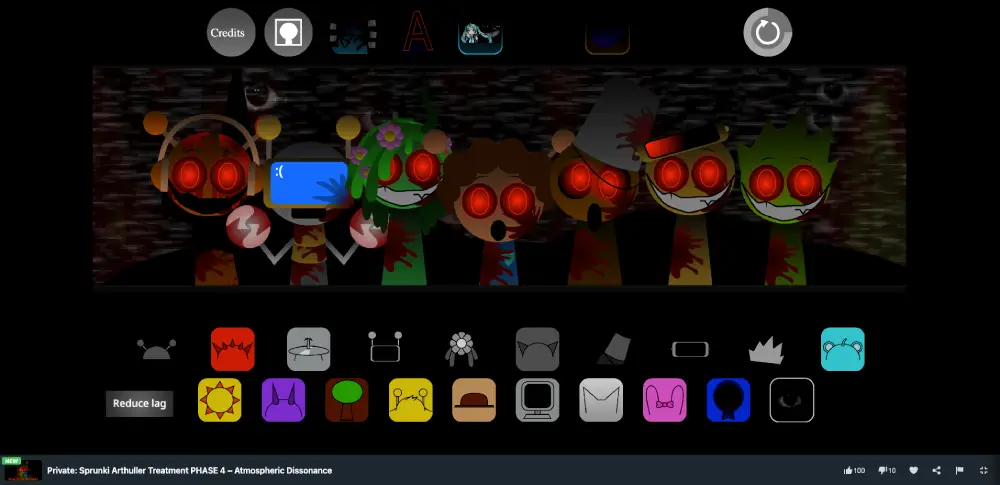
Phase 4 is not a traditional rhythm game; it is a masterfully crafted interactive audio exhibit. By weaponizing atmospheric tension and delivering flawless audio-visual synchronization, it offers a uniquely gripping sandbox experience. If you own a decent pair of headphones and appreciate experimental sound design, you simply cannot ignore this chilling project.









Leave a Reply