


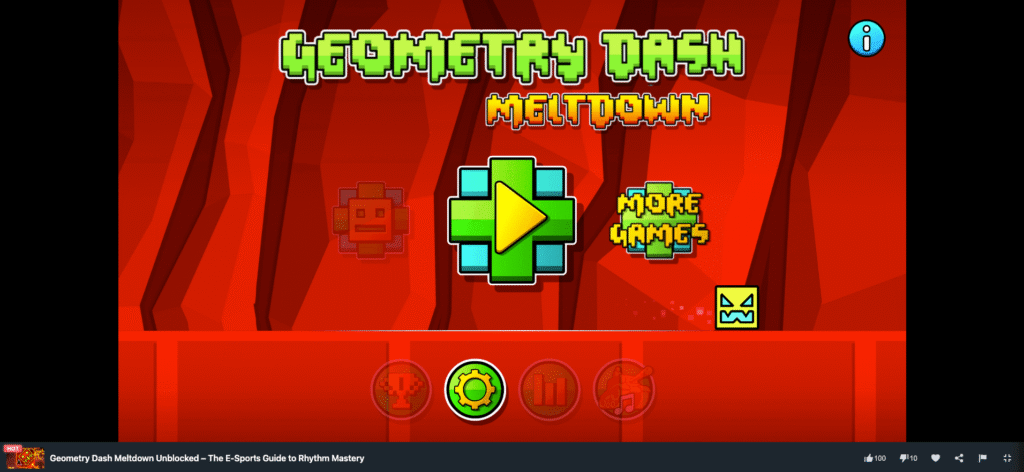
Geometry Dash Meltdown might be billed as an accessible entry point to the infamous rhythm franchise, but do not underestimate its lethality. Dropping you into a scorching, hazard-filled gauntlet, this spin-off demands razor-sharp reflexes, flawless audio-visual synchronization, and absolute mechanical discipline. You are fighting the grid at terminal velocity, where a single dropped frame or mistimed input shatters your icon and resets your run instantly.
Deconstructing the Scorched Physics Engine
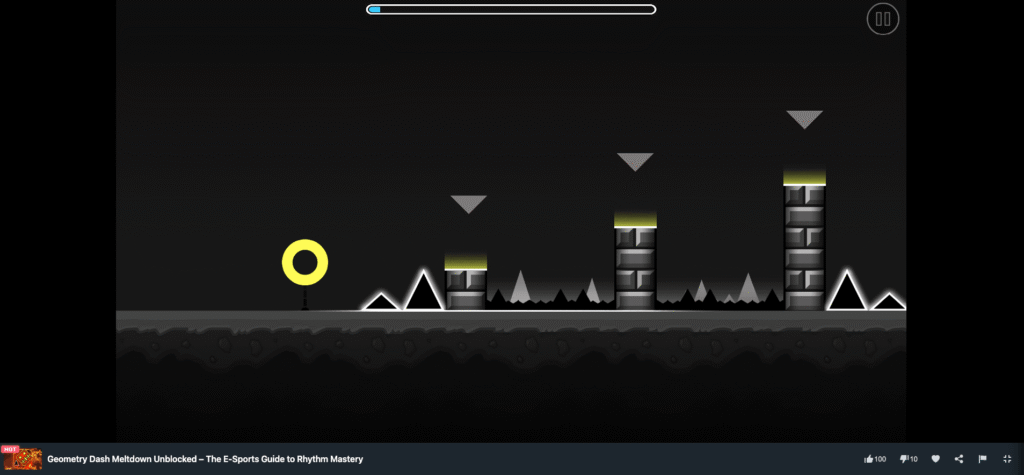
The core gameplay loop of Meltdown is built on a ruthless, deterministic physics engine that punishes hesitation. You have zero control over your forward momentum. The auto-scroller drags you into the kill zone at a locked speed, leaving vertical execution as your only method of survival. When you tap the screen or click your mouse, your geometric avatar locks into a rigid, mathematical jump arc. There is no mid-air course correction, and there is no variable jump height based on how hard you press the key. You either calculate the exact pixel of liftoff, or you crash into a spinning saw blade.
The mechanical complexity violently escalates when you cross the threshold into vehicle portals. Transitioning from the standard cube into the ship or ball forms completely rewires your input logic on the fly. The ship demands analog thrust management—feathering the input to balance gravity against upward momentum to thread the needle through claustrophobic corridors. The ball form introduces instant gravity inversions, forcing you to zig-zag between the floor and the ceiling in a fraction of a second.
Furthermore, Meltdown actively weaponizes its environment. Unlike traditional platformers with static spikes, this iteration throws homing missiles, collapsing pits, and surprise traps directly into your flight path. You cannot simply react to these elements visually; human reaction time at these scrolling speeds is insufficient. To survive the chaos, you must rely entirely on the thumping F-777 electronic soundtrack. The level geometry is meticulously hardcoded to the beat. A heavy bass drop signals a gravity flip, while a rapid snare roll dictates a sequence of micro-jumps. You are executing a sequence of rhythmic inputs where your muscle memory must eventually take over on pure, subconscious instinct.
Advanced Execution and Survival Tactics
- Phase One Execution: Master Audio-Visual Synchronization: In the introductory stage, The Seven Seas, the layout forgives slight input delays, making it the perfect training ground for auditory positioning. Turn off your visual reliance. Staring directly at your cube is a lethal habit that creates tunnel vision. Instead, lock your eyes on the far right edge of your monitor to process the incoming trap layouts early. Tap precisely to the oceanic F-777 beat rather than reacting to the visual proximity of the spike. Building this fundamental audio-syncing habit is mandatory before tackling the high-speed ambushes of the later levels.
- Phase Two Resource Management: Optimize Practice Mode: By the time you reach the neon-drenched chaos of Airborne Robots, the game introduces blistering speeds and rapid, back-to-back transformations between the cube, ship, and ball forms. Your mental stamina will drain rapidly if you attempt to brute-force this stage from zero percent. Treat your cognitive focus as a finite e-sports resource. Immediately drop into Practice Mode to isolate the specific gravity-flipping choke points. Spam manual checkpoints right before the most volatile ship sequences, drilling that exact five-second execution window fifty times until the momentum shifts feel completely effortless.
- Phase Three Evasion: Avoid the Greed Trap: The absolute most fatal beginner mistake is abandoning a safe, consistent route to chase the hidden Secret Coins on early attempts. RobTop specifically designed these collectibles as bait. They are intentionally placed in highly compromised, low-visibility zones that demand erratic, abnormal jump arcs that throw off your established rhythm. Lock down the standard clear route first. Only attempt to secure the Lava Lamp Trail and Molten Wave Design achievements once you have completely mapped the baseline level layout into your muscle memory and can clear the stage on autopilot.
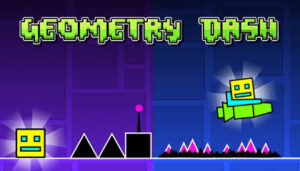
Screenshots playing Geometry Dash Meltdown on MiniWebGames
The Grind to Flawless Execution
The lack of loading screens between deaths turns this punishing gauntlet into a fiercely addictive psychological loop. Shattering your icon at 95% on a brutal Norse-themed track like Viking Arena is agonizing, but the instant restart mechanic makes it incredibly hard to walk away. Do not let tilt ruin your execution or force you to rage-quit. Step back, let your muscle memory consolidate, and approach the grid again. Keep grinding those inputs, because the sheer adrenaline rush of finally nailing that perfect, uninterrupted run is unmatched. Just play and get fun with this game.



Leave a Reply